

Why Your Dishwasher Isn’t Draining (And When to Call a Plumber)
Posted by Jason Genah on 12-08-2025

You load the dishwasher, press start, and walk away — expecting to come back to clean plates, not a pool of dirty, lukewarm water sitting at the bottom. When that happens, it’s more than just annoying. It’s a clear sign that your dishwasher needs attention. And whether it’s a minor clog or a deeper kitchen plumbing issue, standing water is never something to ignore.
The good news? It doesn’t always mean the whole appliance is toast. But knowing when to troubleshoot and when to call a plumber is the difference between a quick fix and a drawn-out, costly mess.
Let’s get into it.
A Clogged Dishwasher Filter Will Shut Everything Down
This is the simplest fix — and the most commonly missed.
Every dishwasher has a filter at the bottom that catches food, grease, and whatever else rides in on your plates. Over time, it clogs up. And when it does, water can’t drain. It just sits there, stale and gross.
If you’ve never checked the filter, or you didn’t even know it existed, start here.
- What to do: Pull out the bottom rack and look around the base. You’ll see a round or flat mesh filter — sometimes it clicks out, sometimes it twists. Either way, it should come out by hand.
- What to look for: Pasta, wet crumbs, grease buildup, even broken glass — all of it can clog things up fast.
- What happens next: Rinse it under hot water. Scrub off the gunk. And don’t forget to check under and around it — buildup likes to hide.
If the filter’s clean and you’re still stuck with water? Keep reading.
Dishwasher Drain Hose Could Be Crimped, Clogged, or Just Poorly Installed
Here’s the part people don’t usually think about: your dishwasher isn’t just an appliance. It’s part of your home’s plumbing system. And that little plastic hose running from the machine to your sink drain or garbage disposal? It does more heavy lifting than it looks.
If the hose is blocked or pinched, water has nowhere to go. And your dishwasher turns into a dirty bathtub.
You might be dealing with this if:
- The machine makes noise, but nothing’s draining. That means the pump is trying — but it’s pushing against a wall of resistance.
- Water shows up in the sink or drains slowly. Sometimes a clog doesn’t stop water completely — it just backs it up in the wrong direction.
- You just installed or moved something. New dishwasher? New disposal? If that hose got kinked or reattached wrong, it’ll choke the drainage.
Unless your setup is wide open and easy to access (and let’s be honest, most aren’t), don’t try yanking the dishwasher out by yourself. You could do more damage than good.
Garbage Disposal Problems That Block Dishwasher Drain Flow
Here’s a sneaky one: if your dishwasher drains through the garbage disposal (which most do), that disposal can block water flow without making it obvious.
This happens all the time, especially after a new install.
- Try running the disposal. If the standing water suddenly moves — boom. That was it. Probably food jammed in the disposal, or a clog right where the dishwasher connects.
- Notice a smell? Or slow sink drainage? That’s not “just the kitchen.” It’s a warning. Food waste, grease, and buildup clogging the disposal can cause water to sit in your dishwasher even if everything inside it works perfectly.
- New disposal recently? There’s a small knockout plug inside that needs to be removed if a dishwasher is hooked up. Installers forget all the time. If it’s still in place, the water has nowhere to go.
This issue lives right in the border zone between appliance and plumbing. If you’re unsure, it’s faster — and usually cheaper — to let a plumber confirm it before you spend hours guessing.
Drain Pump Failure Means Water Isn’t Going Anywhere
Once you’ve ruled out the basics — filter, hose, disposal — the issue might be internal. The drain pump is what physically pushes water out of the dishwasher. If it fails, the water stays put, no matter how clean or unclogged everything else is.
This one’s harder to confirm without taking the machine apart, but a few signs can point to it:
- You hear the pump trying to work, but nothing happens. The motor’s turning, but nothing’s moving — could be a seized impeller or burned-out motor.
- You’ve already cleaned and checked everything else. If nothing’s blocked and water still won’t drain, it’s likely mechanical.
Replacing a pump isn’t cheap, and depending on your dishwasher’s age, it might not be worth it. At the very least, get a quote and compare it against a new unit. Just don’t assume it’s the pump until you’ve ruled out everything upstream.
When It’s Not the Dishwasher — It’s Your Kitchen Plumbing
Here’s the thing most homeowners don’t realize: your dishwasher is just the symptom. The problem might be buried in your plumbing.
If your kitchen sink is slow to drain, makes weird gurgling noises, or backs up when the dishwasher runs — that’s not the appliance. That’s a blockage deeper in the line.
A few signs you’re dealing with a plumbing issue:
- Sink drainage is sluggish — even without the dishwasher running. This tells you the problem is further down in the drain system.
- Water backs up during cycles or drains in weird places. If running the dishwasher causes water to appear in the sink or elsewhere, it’s likely a blocked branch or main drain.
- You’ve had recurring drain issues. If you’ve snaked the sink multiple times and the problem keeps coming back, you’re not solving it — just temporarily relieving pressure.
At this point, you’re past appliance troubleshooting. You need a plumber with a camera and the right tools to figure out where the blockage is and how deep it runs.
When to Call a Plumber for Dishwasher Drain Problems
You can clear filters and check hoses all day — but if you’re still staring at standing water, it’s time to bring someone in.
A professional plumber isn’t guessing. They’ll diagnose whether it’s the dishwasher, the drain line, or the kitchen plumbing — and they’ll do it fast.
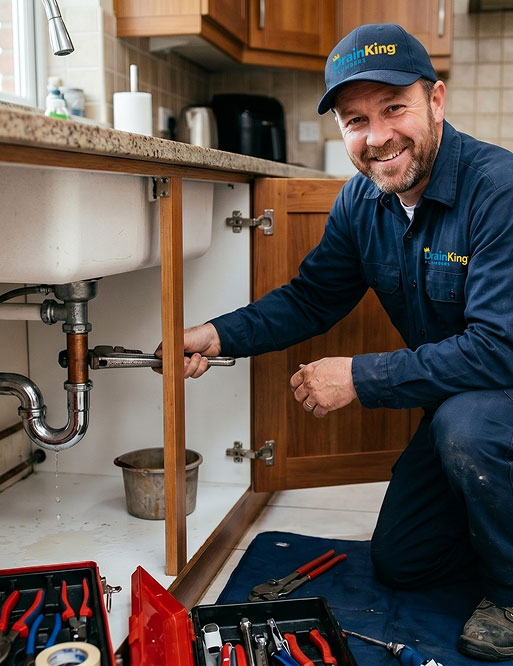
At Drain King Plumbers, we’ve handled every kind of dishwasher drain disaster — from rookie install mistakes to full kitchen line clogs. We don’t just fix what’s visible. We find what’s actually causing the problem and get it done right.
Repair or Replace? It Depends on the Real Problem
Here’s the rule of thumb: if your dishwasher is more than 8–10 years old and the problem is the pump, it may not be worth fixing. But if the issue is plumbing-related — a blocked hose, a clogged disposal, or a drain line issue — that’s usually worth resolving.
Plumbing problems don’t go away on their own. Fixing them now not only saves your dishwasher, but protects your entire system from backups, water damage, and worse.
Take Care of Dishwasher Drain Issues Before They Escalate
If your dishwasher isn’t draining, don’t ignore it. And don’t wait until it floods. Whether it’s a simple blockage or a deeper issue in your kitchen plumbing, this kind of problem only gets more expensive with time.
Contact Drain King Plumbers for a Professional Plumber in Toronto. We offer 24/7 emergency service, drain clearing, dishwasher diagnostics, and full kitchen plumbing inspections — with straight answers and no guesswork.
First-time customer? Mention this blog and get $25 off your first service. Call 833-983-5301 or book your free consultation online.