

Preventing Winter Basement Floods: How to Protect Your Home From Snowmelt and Burst Pipes
Posted by Jason Genah on 05-02-2026

There is a very specific kind of dread that sets in during a Toronto “February Thaw.” On Friday, you’re out there shivering, moving two feet of heavy snow in -15°C weather. By Sunday afternoon, it’s 7°C and pouring rain. While the warmer air feels like a gift, any homeowner who’s lived through a few GTA winters knows that all that white stuff on the lawn has to go somewhere—and it’s usually looking for a way into your house.
Winter basement flooding is its own special kind of disaster. It’s not just about a heavy rainstorm; it’s this messy, high-pressure combination of rock-hard frozen ground, rapid snowmelt, and pipes that are stressed to the breaking point. When the ground is frozen solid, it can’t soak up water like a summer garden. Instead, it acts like a concrete slab, funneling all that meltwater right against your foundation.
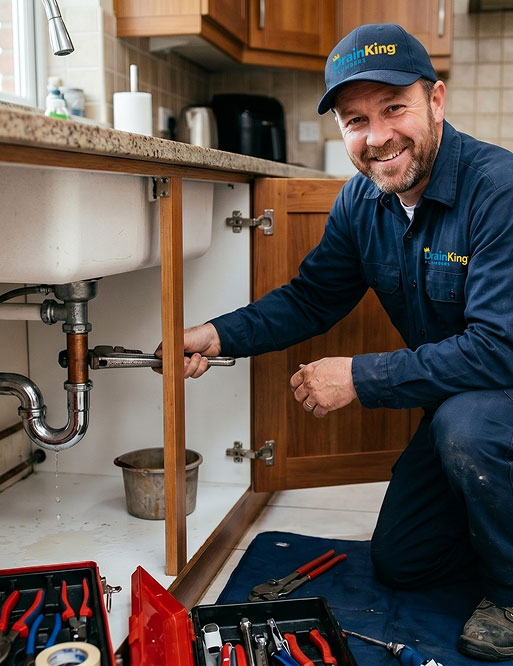
At Drain King Plumbers, we spend a lot of time in February wading through people’s basements. One thing we’ve learned? By the time you notice the baseboards look a little “wavy” or the carpet feels damp, you’re already losing the race against the clock. Here is the real-world guide to keeping your basement dry when the weather decides to go haywire.
The Physics of the “Winter Moat”

If you want to stop a flood, you have to understand the pressure your house is under. Think of your basement like a boat sitting in a frozen pond. In the summer, the soil around your foundation is a sponge. In the winter, that sponge is a brick of ice.
When the temperature spikes, the water from the melting snow pools in the narrow gap between the frozen soil and your foundation walls. This builds up what we call hydrostatic pressure. It’s basically thousands of pounds of water weight leaning against your house. If you have even a tiny, hairline crack in that concrete, that pressure is going to shove water through it like a fire hose.
This is why basement flooding is such a nightmare in older Toronto neighborhoods. Your home is fighting a physics battle against gravity, and without the right drainage, the water is going to win every single time.
The Heart of the Defense: Sump Pump Maintenance
If you have a sump pit, that pump is literally the only thing keeping you from a $40,000 restoration bill. But let’s be honest: most people never even look at their pump until they hear it making a weird noise—or worse, until it stops making any noise at all.
The Action: Give it a “Mid-Winter Stress Test.”
Don’t just look at it. Grab a five-gallon bucket, fill it with water, and dump it straight into the pit. You want to see that float move, hear the motor kick in, and watch that water disappear fast.
Watch Out for Frozen Lines: This is where people get caught. The pipe that carries the water away from your house can freeze at the exit point. If that pipe is buried under a snowdrift or blocked by an icicle, your pump is going to work itself to death, burn out the motor, and leave you with a basement full of water anyway. Make sure the exit path is clear.
Pro Tip: If you don’t have a battery backup, you’re gambling. Big winter thaws often come with wind and ice storms that knock out the power. If the hydro goes out while the snow is melting, your main pump is just a heavy paperweight. A backup system is the best sleep insurance you can buy.
The Gatekeeper: Backwater Valve Inspection
If you’re in a part of the city where the sewers are a bit older, a backwater valve is your best friend. It’s a simple one-way gate: water goes out, but city sewage can’t come back in.
During a massive thaw, the city’s sewer lines get overwhelmed. If that happens, the pressure can push “black water” (the stuff you really don’t want to see) back up through your floor drain. A functioning backwater valve stops that cold.
The Action: Pop the access cover on your floor and take a look. If there’s hair, grease, or grit stuck in the “flapper,” the valve won’t seal shut. A five-minute cleaning job today can save you from a “total loss” insurance claim tomorrow.
Interior Vulnerabilities: The “Inside-Out” Flood
External meltwater is only half the battle. Your own pipes can turn on you if they get too cold. Pipes in crawlspaces, unheated basements, or running along an exterior wall are the prime suspects for frozen pipes.
When water turns to ice, it expands. When it thaws out, that split in the copper opens up and turns your basement into a swimming pool.
The Solution:
- Target the “Cold Spots”: Get those foam sleeves on any exposed pipe near the rim joists.
- Stop the Drafts: If you can feel a breeze coming in where the gas line or dryer vent exits the house, seal it. A tiny stream of freezing air hitting a pipe for a few hours is all it takes to cause a disaster.
Outdoor Triage: Gutters and Downspouts

It feels weird to talk about gutters when there’s two feet of snow on the roof, but they are actually a massive part of waterproofing your basement.
If your gutters are packed with ice (ice dams), the melting snow from the roof won’t go down the downspout. It’ll just spill over the side and land right next to your foundation. You’re basically hand-delivering water to your basement walls.
The Goal: Make sure your downspout extensions are actually attached and discharging water at least six feet away from the house. If they’re buried under a mountain of snow, clear a path. You want that water moving toward the street, not sitting in your window wells.
The Long-Term Play: Professional Waterproofing
If you spend every rainy night checking the basement with a flashlight, you’re living in “reactive” mode. Eventually, the luck runs out. Modern waterproofing basement techniques have come a long way, and they don’t always involve digging up your whole yard.
Professional Drain King Plumbers flood protection is about finding the weak spots before the water does. We use things like thermal imaging to see moisture behind the drywall that you can’t see with the naked eye. Whether it’s an exterior membrane or an interior drainage system, getting it fixed once means never having to worry about a “February Thaw” again.
Triage Guide: What to do if you see water
If you walk downstairs and hear that “squish” in the carpet, don’t panic, but move fast:
- 1. Electricity and Water Don’t Mix: If the water is deep enough to touch outlets or your furnace, stay out. Call an electrician or the utility company to kill the power before you step in.
- 2. Find the Source: Is it bubbling up from the floor drain? (Sewer backup). Is it trickling down the wall? (Foundation leak). Knowing this tells us what tools to bring.
- 3. Save the Good Stuff: Get the electronics and the old photo albums off the floor first.
- 4. Call the Pros: Basement water isn’t just “wet.” It carries bacteria and can lead to mold in as little as 48 hours. You need more than a few fans; you need industrial-grade extraction and sanitation.
Why Prevention is the Only Real Strategy
Water is the most destructive force your home will ever deal with. It doesn’t just ruin the carpet; it eats away at the structural integrity of your foundation. In Toronto, the weather is getting more extreme and the thaws are getting faster. Your home needs to be ready for the “swing.”
Don’t spend the rest of the winter stressed out by the weather report. A quick check of your pump and your valves today can save you months of construction and insurance headaches later.
If you aren’t sure if your sump pump is up to the task, or if you’ve noticed some suspicious dampness in the corners of the basement, give us a shout. It’s a lot cheaper to fix a pump than it is to gut a finished basement.
Reach out to Drain King Plumbers today at 833-983-5301, email us at info@drainkingplumbers.ca, or click here to get in touch online.